# 6 best cat water fountains that picky cats actually use in 2026
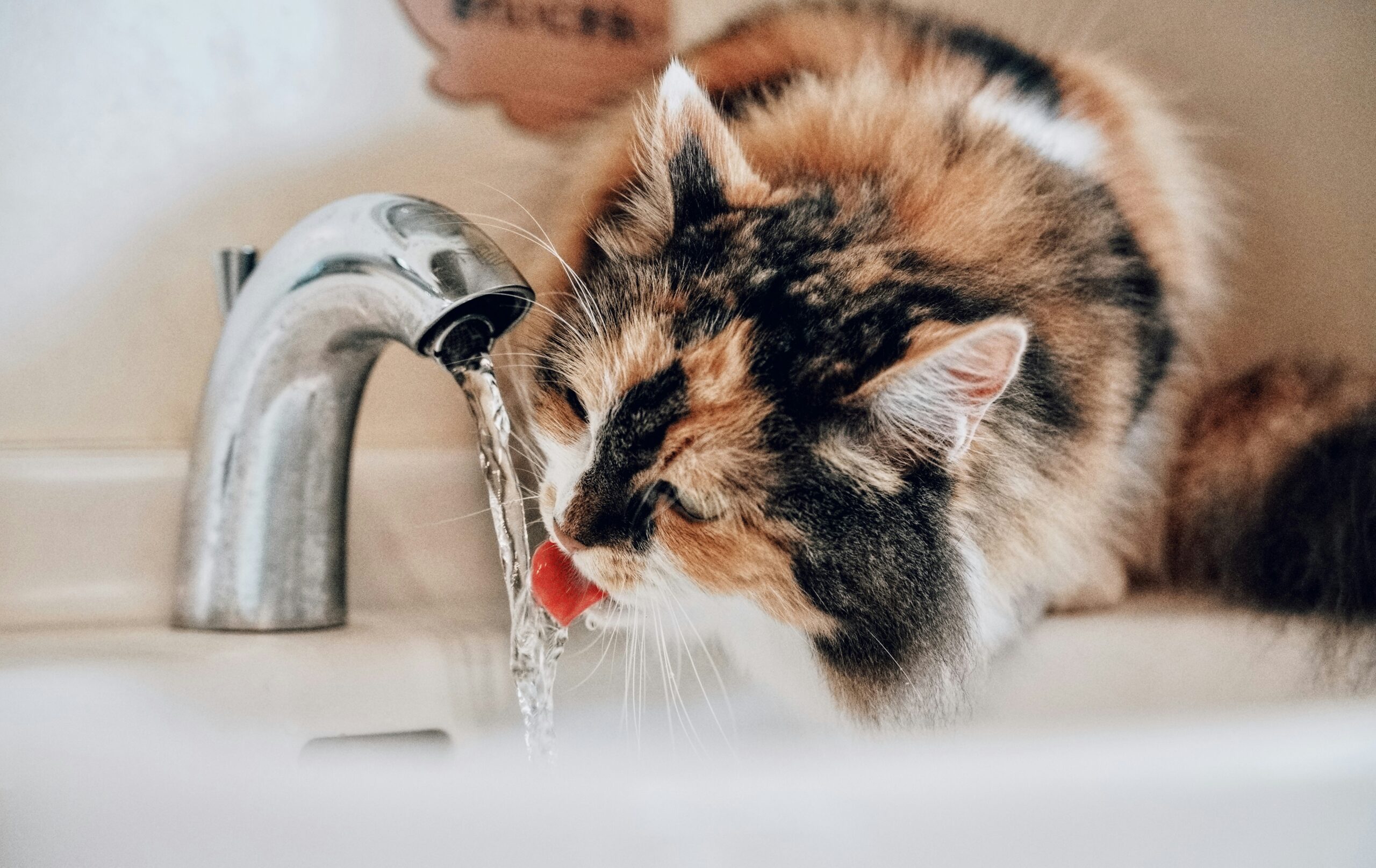
You refill the water bowl every morning, and every evening it’s still full. Meanwhile your cat is licking condensation off the bathroom mirror or shoving her face into your glass the second you set it down. Sound familiar?
I went through this exact cycle before I started researching the best cat water fountain options. Turns out the problem wasn’t the water — it was the delivery. Most cats are wired to distrust still water. In the wild, standing water means stagnant water. A fountain that keeps things moving taps into that instinct and can be the difference between a well-hydrated cat and one heading toward kidney issues down the road.
But here’s what I learned the hard way: not all cat water fountains are equal, and the cheap plastic ones that dominate Amazon’s first page come with their own problems — bacterial buildup in scratched surfaces, chin acne from plastic contact, and filters that cost more per year than the fountain itself. That’s why I focused this list on stainless steel and ceramic models only. These materials are safer, easier to clean, and last longer. If you’re going to invest in a best cat water fountain, it should be one your cat actually drinks from and one you don’t dread cleaning every week.
| Product | My pick | Rating | Price | Best for |
|---|---|---|---|---|
| iPettie Tritone Ceramic | 🏆 Best overall | 4.5 ⭐ (4,100+) | $57.99 | Quietest pump, easiest to clean |
| GIOTOHUN Stainless Steel | 💰 Best budget | 4.3 ⭐ (11,100+) | $19.97 | Under $20, dual flow modes |
| PEKTACO Stainless Steel | Best stainless steel | 4.3 ⭐ (5,900+) | $26.99 | Large capacity, dishwasher safe |
| DOOOB Ceramic | Best ceramic runner-up | 4.4 ⭐ (800+) | $49.98 | Affordable ceramic option |
| KittySpout Stainless Steel | Best for multi-cat homes | 4.4 ⭐ (800+) | $69.95 | 4L capacity, ultra-quiet pump |
| PetSafe Seaside Stainless | Best premium brand | 4.2 ⭐ (4,500+) | $93.49 | Trusted brand, soothing flow |
## What to look for in the best cat water fountain
Before I walk through each pick, here are the factors that actually matter when choosing a best cat water fountain — especially if you’re dealing with a cat who refuses to drink from anything normal.
### Material matters more than you think
This is the single biggest differentiator and the reason I excluded plastic fountains from this list entirely. Plastic scratches over time, and those scratches harbor bacteria no matter how often you scrub. That bacteria can cause chin acne in cats (those little black bumps on your cat’s chin) and can make the water taste off — which defeats the whole purpose of getting a fountain in the first place.
Stainless steel is non-porous, rust-resistant, and usually dishwasher safe. Ceramic is heavier (less likely to get knocked over by enthusiastic drinkers), naturally cool to the touch, and equally easy to sanitize. Both materials are BPA-free by nature. The trade-off is weight and price: ceramic fountains are heavier and typically cost more, while stainless steel is lighter and more affordable.
### Noise level
If your cat startles easily — or if you keep the fountain in a bedroom — pump noise is a dealbreaker. Most modern fountains advertise “ultra-quiet” operation, but the reality varies. Look for specific decibel ratings rather than marketing language. Anything under 30 dB is genuinely quiet (for reference, a whisper is about 30 dB). Some pumps get louder as the water level drops, so capacity matters here too — a larger reservoir stays quieter longer between refills.
Cats that are afraid of noise may avoid a fountain entirely if the motor hums or gurgles. If you have a nervous cat, you might also want to explore calming supplements to help them adjust during the transition period.
### Flow style and water movement
Fountains generally offer one or more of these flow patterns: a gentle bubble that barely breaks the surface, a freefall stream like a faucet, or a cascade that flows down a ramp. Some cats prefer drinking from the stream itself (they like the “faucet” experience), while others prefer lapping from the pool at the base where the water is calmer but still circulating.
If your cat already drinks from the bathroom faucet, a stream-style fountain will feel familiar. If your cat drinks from her bowl but just doesn’t drink enough, a gentle bubble or cascade might be less intimidating as a first fountain.
### Filter system and ongoing costs
Every fountain uses filters, and the replacement cost adds up. Before buying, check how much the replacement filters cost and how often they need changing. Most filters last 2-4 weeks depending on how many pets use the fountain and how much hair and debris gets in.
A typical filter runs $2-4 per replacement. At biweekly changes, that’s roughly $50-100 per year. Some brands sell multi-packs that bring the per-filter cost down significantly. I’ll note the filter economics for each pick below so you can factor ongoing costs into your decision, not just the sticker price.
### Capacity and refill frequency
Fountains range from about 60 oz (1.8L) to 135 oz (4L). A single indoor cat drinking the recommended 3.5-4.5 oz of water per pound of body weight per day needs roughly 7-9 oz daily for a 10-lb cat. So even a small 60 oz fountain lasts nearly a week for one cat in theory — but evaporation and splashing mean you’ll refill sooner.
For multi-cat households, go bigger. A 2-cat home should aim for at least 2.5L (85 oz). Three or more cats? The 4L options earn their price.
### Cleaning difficulty
This is the factor that determines whether you actually maintain the fountain or let it become a science experiment. Look for fountains with few parts, wide openings you can reach into, and dishwasher-safe components. Ceramic and stainless steel both clean up faster than plastic, but some designs have narrow channels or complicated pump housings that trap grime.
I recommend a full disassembly and scrub every 1-2 weeks, with a filter change at the same time. If that sounds like a lot, choose a fountain with fewer parts — the simpler the design, the more likely you’ll keep up with maintenance. Also worth noting: some pumps develop a slimy biofilm coating faster than others. Stainless steel and ceramic pumps resist this better, but you should still rinse the pump impeller each time you clean the basin. A small bottle brush makes this much easier.
## Best overall: iPettie Tritone Ceramic
The iPettie Tritone is what I recommend to most cat owners because it nails the three things that matter most: safe material, quiet operation, and easy cleaning.
The ceramic body is made from natural clay, glazed smooth, and heavy enough that even a determined cat isn’t tipping this over. At 2.1L (71 oz), it holds enough water for a single cat for about a week, or 2-3 days for a multi-cat household.
**Key specs**
– Capacity: 2.1L / 71 oz
– Material: Natural ceramic, glazed
– Pump power: 2W (CE certified, IP68 waterproof)
– Filtration: Dual system — foam pre-filter + carbon filter
– Weight: approximately 4.5 lbs empty
– Warranty: 3-year warranty on pump
**What I like**
– The 2W pump is genuinely whisper-quiet — multiple reviewers confirm you can only hear it if you put your ear right next to it, and it stays quiet even as the water level drops
– Ceramic doesn’t scratch, doesn’t harbor bacteria, and doesn’t leach chemicals — it’s the safest material choice for pet water containers
– The wide-mouth design means you can actually get your hand inside to scrub it, unlike fountains with narrow necks or complicated internal channels
– Comes with replacement filters and foam included in the box, so you’re not buying extras on day one
– The gentle cascade flow appeals to cats that are intimidated by faucet-style streams
**What I don’t like**
– At 2.1L, this is on the smaller side — you’ll refill every 3-4 days with one cat, more often with two
– Ceramic is heavy, which is good for stability but makes cleaning day feel like a workout
– The white ceramic shows mineral deposits and hard water stains over time (a vinegar soak handles this, but it’s an extra step)
[Check the latest price on Amazon](https://www.amazon.com/dp/B0727WXT7M?tag=pawpickr-20)
## Best budget: GIOTOHUN Stainless Steel
Under $20 for a full stainless steel cat water fountain with 11,000+ reviews — that’s hard to beat. The GIOTOHUN is the entry point I recommend if you’re not sure your cat will even use a fountain and you don’t want to gamble $60 finding out.
**Key specs**
– Capacity: 2.2L / 74 oz
– Material: SUS 304 stainless steel
– Flow modes: Faucet stream + fountain bubble
– Filtration: Sponge + carbon filter
– Noise: Upgraded low-noise pump
**What I like**
– Two flow modes in one unit: a faucet-style running stream and a gentler fountain bubble — you can experiment with which one your cat prefers
– Full 304 stainless steel construction at this price point is unusual; most sub-$25 fountains are plastic
– With 11,100+ reviews, this is one of the most battle-tested options on Amazon — patterns in the reviews are more reliable than any single opinion
– The pump is easy to disassemble for cleaning, which is the step most people skip (and then wonder why their fountain gets slimy)
**What I don’t like**
– No water level window, so you’re lifting or tilting to check how much water is left
– The filter system is basic — single-stage compared to the triple-layer systems on pricier models
– Some reviewers note the faucet stream mode can splash on hard floors if the fountain is on a low surface
[Check the latest price on Amazon](https://www.amazon.com/dp/B0DDPYHHFX?tag=pawpickr-20)
## Best stainless steel: PEKTACO Stainless Steel
The PEKTACO sits in a sweet spot: premium 304 stainless steel construction with features you usually only find on $50+ models, but at $27. It’s my pick for someone who wants the best stainless steel cat water fountain without spending ceramic-level money.
**Key specs**
– Capacity: 3.2L / 108 oz
– Material: Food-grade 304 stainless steel
– Pump noise: ≤25 dB
– Filtration: Triple-layer (sponge pre-filter + activated carbon + ion-exchange resin)
– Features: Water level window, dishwasher safe
**What I like**
– The triple-layer filtration system at this price is a standout — the ion-exchange resin softens hard water, which matters if you have mineral-heavy tap water that leaves deposits
– A water level window means you can see when to refill without lifting the lid — small feature, big convenience
– 3.2L capacity is generous; handles 2-3 cats comfortably
– Dishwasher safe makes cleaning day much faster
– The ≤25 dB pump spec is one of the lowest I found with a specific decibel claim (most just say “quiet” without numbers)
**What I don’t like**
– The design is purely functional — if you care about aesthetics, the iPettie or DOOOB ceramic options look more like home decor
– At 108 oz, it’s physically larger than the compact options; not ideal if counter space is tight
– The pump housing can be fiddly to reassemble after deep cleaning according to some reviewers
If you already have other stainless steel pet products — like a stainless steel slow feeder bowl — the PEKTACO will match nicely in your kitchen setup.
[Check the latest price on Amazon](https://www.amazon.com/dp/B0C5R7CM7Y?tag=pawpickr-20)
## Best ceramic runner-up: DOOOB Ceramic
If you want ceramic but the iPettie’s $58 price tag gives you pause, the DOOOB is a solid alternative at $50. It’s a similar concept — glazed ceramic body, quiet pump, carbon filtration — with a few differences that might make it the better fit depending on your situation.
**Key specs**
– Capacity: 2.1L / 71 oz
– Material: Ceramic, glazed
– Filtration: Carbon filter + sponge pre-filter
– Included extras: 3 replacement filters + 3 replacement sponges
– Pump: Ultra-quiet, low power consumption
**What I like**
– Ships with 3 filters and 3 sponges — that’s roughly 3 months of replacements included in the box, which is more generous than most competitors
– The glazed ceramic surface is smooth and easy to wipe clean
– Compact footprint that works well on counters or in small apartments
– The flow pattern creates a gentle cascade that doesn’t splash
**What I don’t like**
– With 800+ reviews versus iPettie’s 4,100+, there’s less long-term reliability data from real users
– No specific decibel rating published — reviewers say it’s quiet, but without a spec I can’t confirm it’s as quiet as the iPettie’s 2W pump
– The design is fairly basic compared to the iPettie Tritone’s distinctive look
[Check the latest price on Amazon](https://www.amazon.com/dp/B0DDT3X9F2?tag=pawpickr-20)
## Best for multi-cat homes: KittySpout Stainless Steel
If you have two, three, or more cats sharing water, capacity is everything. The KittySpout’s 4L (135 oz) reservoir is the largest in this lineup by a significant margin — nearly double the PEKTACO and triple the ceramic options.
**Key specs**
– Capacity: 4L / 135 oz
– Material: 304 stainless steel
– Pump noise: ≤20 dB
– Pump power: 1.5W
– Features: Built-in water level indicator, space-saving profile
**What I like**
– 135 oz means fewer refills — in a 2-cat household, you can go 5-7 days between fill-ups
– The ≤20 dB pump spec is the quietest claimed noise level in this entire roundup
– The 1.5W pump draws almost nothing in electricity — roughly $2-3 per year to run continuously
– The water level indicator window prevents the “is it empty yet?” guessing game
– Sleek, modern design that doesn’t look like pet equipment
**What I don’t like**
– At $70, you’re paying a premium for capacity — if you only have one cat, the PEKTACO gives you 3.2L for $27
– With 800+ reviews it’s a newer product, so long-term durability data is still building
– The large size takes up more counter space than compact models
[Check the latest price on Amazon](https://www.amazon.com/dp/B0DQC6H9FB?tag=pawpickr-20)
## Best premium brand: PetSafe Seaside Stainless
PetSafe has been making pet fountains since the Drinkwell line launched over 15 years ago. If brand trust and retail availability matter to you — maybe you want to see it in person at PetSmart before buying, or you value a brand with a long customer service track record — the Seaside is their stainless steel offering.
**Key specs**
– Capacity: 60 oz / 1.8L
– Material: Stainless steel, scratch and rust-resistant
– Flow: Soothing stream design
– Included: 2 carbon filters + 1 pump
– Brand: PetSafe (established pet brand with retail presence)
**What I like**
– PetSafe’s customer service and warranty support are well-established — if something breaks, you’re dealing with a real company with phone support, not a third-party Amazon seller
– The soothing stream flow design is specifically engineered to attract reluctant drinkers
– Scratch-resistant stainless steel with a smooth interior finish
– Available at major pet retailers (PetSmart, Petco, Chewy) — you can return it in-store if it doesn’t work out
**What I don’t like**
– At $93, this is by far the most expensive option on this list — and the 60 oz capacity is actually the smallest
– The 4.2★ rating is the lowest in this roundup; common complaints include pump noise increasing after several months and the relatively small water reservoir
– Replacement filters and pumps are PetSafe-specific and tend to cost more than generic equivalents
– No water level window
[Check the latest price on Amazon](https://www.amazon.com/dp/B088RLTP1Q?tag=pawpickr-20)
## Which one should you get?
The right cat water fountain depends on your specific situation. Here’s how to narrow it down:
**If your cat has never used a fountain before** → start with the GIOTOHUN ($20). It’s cheap enough that if your cat ignores it, you haven’t lost much. The dual flow modes let you experiment with what your cat prefers. If they take to it, you can always upgrade later.
**If you want the safest, cleanest material** → go ceramic. The iPettie Tritone ($58) is my top pick for a reason: ceramic doesn’t scratch, doesn’t leach, and cats seem to prefer the temperature of water in ceramic over metal. If budget is tighter, the DOOOB ($50) gives you the same material benefits with more filters in the box.
**If you have 2+ cats** → the KittySpout ($70) with its 4L capacity saves you from refilling every other day. The PEKTACO ($27) is the budget alternative at 3.2L.
**If you want stainless steel with the best feature set** → the PEKTACO ($27) wins on value. Triple-layer filtration, water level window, dishwasher safe, and ≤25 dB noise — all at under $30.
**If brand trust matters most** → the PetSafe Seaside ($93) is from a company with retail stores, phone support, and a 15-year track record in pet fountains. You’re paying for the safety net as much as the product.
**If your cat is noise-sensitive or anxious** → the iPettie Tritone (2W ceramic) or KittySpout (≤20 dB) are your safest bets. Both are quiet enough for bedrooms. If noise anxiety extends beyond the fountain, you might also want to look into an automatic cat feeder with camera — setting up consistent feeding and hydration routines in the same area can help anxious cats feel more settled.
## Frequently asked questions
### Are cat water fountains better than regular bowls?
For most cats, yes. Cats evolved to prefer moving water because stagnant water in the wild often carried bacteria. A fountain keeps water circulating, filtered, and oxygenated, which many cats find more appealing. Veterinarians generally recommend fountains for cats that don’t drink enough from bowls, especially cats on a dry food diet who need more water intake.
### How do I get my cat to drink from a fountain?
Patience and parallel options. Don’t remove the old water bowl right away — place the fountain nearby and let your cat investigate on her own terms. Some cats are drawn to it immediately; others need a week or more. Try placing it in a different spot than where food is served (cats instinctively avoid water near food sources). You can also try adding a small amount of low-sodium chicken broth to the fountain water during the first few days to attract interest.
### How often should I clean a cat water fountain?
A full disassembly and scrub every 1-2 weeks is ideal. This means rinsing the pump, replacing the filter, and washing the basin and any internal parts. Between deep cleans, top off the water daily and wipe any visible buildup. Stainless steel and ceramic are easier to keep clean than plastic because their surfaces don’t scratch and harbor bacteria the way plastic does.
### Is stainless steel or ceramic better for a cat water fountain?
Both are excellent choices and far superior to plastic. Stainless steel is lighter, more affordable, and usually dishwasher safe. Ceramic is heavier (more stable), keeps water slightly cooler, and some cats seem to prefer it. The main downside of ceramic is weight and fragility — drop it and it might chip or crack. Stainless steel is virtually indestructible.
### Why does my cat drink from the faucet but not the bowl?
Cats are attracted to running water because it signals freshness. The movement, sound, and oxygenation of flowing water are all appealing. A still bowl of water doesn’t trigger those instincts. A fountain bridges the gap — it provides the running water experience your cat craves without you leaving the faucet on all day.
### How much does it cost to run a cat water fountain?
Very little. Most cat water fountains use pumps that draw 1.5-5 watts. At average US electricity rates, running a 2W pump 24/7 costs roughly $2-3 per year. The real ongoing cost is replacement filters, which typically run $2-4 each and need changing every 2-4 weeks — budget about $50-100 per year for filters depending on the brand.
### Can I use tap water in a cat water fountain?
Yes, tap water is fine for most cat fountains. The built-in filters handle chlorine, sediment, and light mineral content. If you have extremely hard water (heavy mineral deposits), you might want a fountain with ion-exchange resin filtration like the PEKTACO, which specifically softens hard water. You don’t need to use bottled or distilled water.
## Final verdict
The best cat water fountain for most people is the **iPettie Tritone Ceramic**. It hits the sweet spot of safe materials, genuinely quiet operation, and a design that’s easy to maintain long-term. The 4,100+ reviews confirm what I found: cats take to it, it stays quiet, and the ceramic body holds up well.
If $58 feels like a lot to spend before you know whether your cat will even use a fountain, the **GIOTOHUN at $20** removes that risk entirely. It’s full stainless steel, has two flow modes to experiment with, and 11,000+ cat owners have validated it. Start there and upgrade if your cat becomes a fountain convert.
The right fountain is the one your cat actually drinks from. Material and noise level matter more than capacity or brand name — get those two things right and the rest is details.
2 thoughts on “6 best cat water fountains that picky cats actually use in 2026”