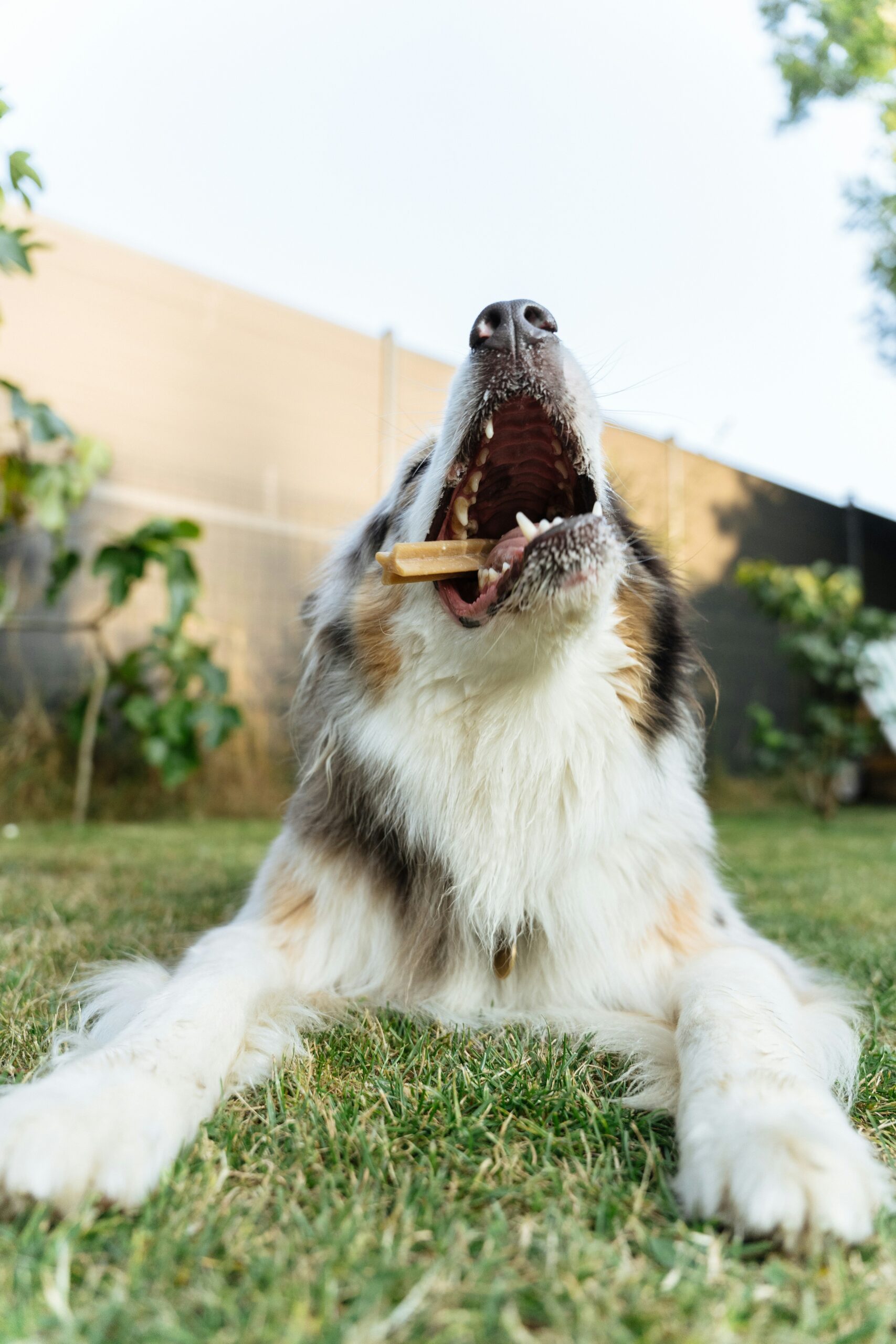
My vet held up the X-ray and pointed at the dark spot near my dog’s gum line. “See that? That’s tartar pushing into the tissue. At his age, we need to stay ahead of this.” My 10-year-old beagle mix had been eating fine, acting normal — I had no idea his teeth were quietly getting worse. That conversation sent me searching for the best dental chews for senior dogs, and what I found was frustrating: most lists recommend the same hard chews that could actually crack an older dog’s worn teeth.
So I spent several weeks comparing dental chews specifically through the lens of what works for aging dogs — softer textures, gentler formulas, and real evidence behind the claims. If you’re looking for the best dental chews for senior dogs that are actually safe for older mouths, this guide is built for you.
Here’s what made the cut, why I picked each one, and which ones I’d skip.
A quick note before we get into products: dental chews are a helpful part of your dog’s oral care routine, but they’re not a replacement for veterinary dental exams. If your senior dog has red or bleeding gums, loose teeth, or has stopped eating hard food, please see your vet first. Some dogs need a professional cleaning before daily chews can do their job. Think of these products as maintenance tools — not a fix for existing problems.
| Product | My pick | Rating | Price | Best for |
|---|---|---|---|---|
| Greenies Aging Care | 🏆 Best overall | 4.6 ⭐ | ~$26 | Senior dogs who can still chew moderately |
| Purina DentaLife Large | 💰 Best budget | 4.6 ⭐ (10,800+) | ~$13 | Cost-effective daily use for bigger dogs |
| ARK Naturals Brushless Toothpaste | Best for sensitive chewers | 4.4 ⭐ (3,000+) | ~$16 | Dogs who’ve had extractions or hesitate with harder chews |
| ProDen PlaqueOff Soft Chews | Best for dogs with few teeth | 4.2 ⭐ (1,600+) | ~$24 | Dogs who can barely chew — works through saliva, not abrasion |
| Pedigree Dentastix S/M | Best for daily maintenance | 4.7 ⭐ (8,300+) | ~$8 | Everyday use at the lowest cost per chew |
How to choose the best dental chews for senior dogs
Before jumping into individual products, here’s what actually matters when you’re picking dental chews for a senior dog. These aren’t the same criteria you’d use for a two-year-old lab — older dogs have specific needs that most buying guides gloss over.
Texture and hardness matter more than anything
This is the single biggest factor for senior dogs, and it’s the one that most articles get wrong. Hard dental chews like antlers, bones, and stiff nylon sticks are the leading cause of fractured teeth in older dogs. A senior dog’s enamel is thinner, their jaw strength may be reduced, and they’re more likely to have teeth that are already compromised.
Look for chews that have some give to them — porous textures, softer formulas, or chews that break apart when bitten rather than requiring sustained hard gnawing. The VOHC (Veterinary Oral Health Council) tests products specifically for efficacy, and several of the softer options on this list carry their seal.
VOHC acceptance: the closest thing to a guarantee
The VOHC Seal of Acceptance is the most reliable standard for dental products in veterinary care. It means the product has been independently tested and proven to reduce plaque or tartar by a meaningful amount. Not every product on the market has this — in fact, most don’t. Three of the five picks on this list are VOHC-accepted, and I’ve noted which ones in each review.
You can check the full list at vohc.org (external resource — I don’t earn a commission on this link). It’s one of the few objective measures in a market flooded with marketing claims.
Size and calorie considerations
Senior dogs are more prone to weight gain because their metabolism slows with age. Some dental chews pack 70-100 calories per stick, which can add up fast if your dog is on the smaller side or already on a calorie-restricted diet. I’ve noted the approximate calorie counts in each review so you can factor it in.
Size matters too — a chew designed for a 60-pound dog in a 15-pound dog’s mouth is a choking hazard. Always match the chew size to your dog’s weight range, and err on the smaller side if your dog tends to gulp treats whole.
Ingredients to watch for
Senior dogs are more likely to have food sensitivities that developed later in life. Wheat, corn, and artificial colors are common triggers. If your dog has been scratching more, having digestive issues, or getting ear infections, it’s worth trying a chew with a simpler ingredient list.
For dogs with specific health conditions — kidney issues, thyroid problems, or diabetes — talk to your vet before adding any supplement-style dental product. Some kelp-based chews, for example, are high in iodine and aren’t recommended for dogs with thyroid conditions.
Mechanical vs. systemic action
Most dental chews work mechanically: the chewing motion scrapes plaque off the teeth, similar to how brushing works for us. But there’s a second category — systemic products that work through the bloodstream. These contain ingredients (usually a specific type of kelp) that change the composition of your dog’s saliva, making it harder for plaque to stick to teeth in the first place.
For senior dogs who can still chew normally, mechanical chews are the standard. But for dogs who’ve had multiple extractions or can barely chew at all, systemic options are worth considering. I’ve included one on this list specifically for that reason.
🏆 Best overall: Greenies Aging Care
Greenies Aging Care is the only dental chew on the market specifically designed for senior dogs. It’s VOHC-accepted for tartar control, and the formula is 50% softer than standard Greenies — which matters a lot when you’re dealing with worn or sensitive teeth.
Key specs:
- VOHC-accepted for tartar control
- 50% softer texture vs. regular Greenies
- Added glucosamine and chondroitin for joint support
- Available in Teenie (5-15 lbs), Petite (15-25 lbs), and Regular (25-50 lbs)
- ~90 calories per Regular chew
- Made in the USA
What I like:
- The softer texture is noticeable — it gives when you press it with your thumb, unlike standard Greenies which are quite firm. My neighbor’s 12-year-old lab mix chews through these without the jaw fatigue she shows with harder treats.
- VOHC acceptance means this isn’t just marketing. It’s been tested and proven to reduce tartar.
- The glucosamine and chondroitin are a nice bonus for senior dogs who are likely dealing with joint stiffness too. It’s not a therapeutic dose, but it’s a meaningful addition. If your senior dog also needs joint support, our guide to orthopedic calming dog beds covers more ways to keep older dogs comfortable.
- Soluble and highly digestible — less risk of GI blockage than chews that don’t break down well.
What I don’t like:
- The Amazon review count is lower than I’d normally accept (~200-300 for some size variants). This is because the Aging Care line is a niche product — Greenies’ standard line has tens of thousands of reviews, but the senior version is newer and less well-known. I’m comfortable with the exception because the VOHC seal and the Greenies manufacturing track record fill the credibility gap.
- The price is premium — roughly $1.50-1.75 per chew depending on the pack size. For a daily chew, that adds up.
- Some reviewers report intermittent stock issues, especially for the Teenie size. Check availability before committing.
Check the latest price on Amazon
💰 Best budget: Purina DentaLife Daily Oral Care
If you need an affordable dental chew that works without a big price tag, DentaLife is the answer. It’s VOHC-accepted for plaque control, and Purina’s own clinical data shows a 57% reduction in tartar with daily use. At roughly $0.72 per chew for the Large 18-count bag, it’s less than half the cost per chew of the Greenies Aging Care.
Key specs:
- VOHC-accepted for plaque control
- Porous, chewy texture — not hard or brittle
- Available in Small (21ct), Large (18ct), and variety packs
- ~50 calories per Large chew
- Made in the USA
What I like:
- The porous texture is key for senior dogs. It has a spongy, ridged surface that cleans between teeth without requiring heavy-duty jaw pressure. Older dogs can work through these at their own pace.
- VOHC-accepted with clinical data behind it — 57% tartar reduction is a strong number and gives me confidence recommending this as one of the more affordable dental chews for dogs that actually deliver results.
- Lower calorie count than most competitors, which matters for seniors on restricted diets.
- Widely available — you can find these at almost any pet store or pharmacy, not just Amazon.
What I don’t like:
- This is the Large size (40+ lbs), so it’s not ideal for small seniors. The Small variant exists but has a different pack count and price point — make sure you’re buying the right size.
- Not specifically formulated for senior dogs. The texture happens to work well for older mouths, but there’s no age-specific adjustment to the formula.
- Some dogs don’t love the taste. Reviews are mostly positive, but a handful of picky eaters reject these. DentaLife doesn’t have the strong meat flavor of some competitors.
Check the latest price on Amazon
Best for sensitive chewers: ARK Naturals Brushless Toothpaste
If your senior dog has had dental extractions or visibly hesitates when biting down on treats, ARK Naturals is built for exactly that situation. Their product line includes options rated as the softest on ARK’s own Denta-Meter hardness scale, and the unique selling point is the toothpaste center — each chew has a core of enzymatic toothpaste that coats the teeth as the dog chews.
Key specs:
- Toothpaste-filled center (proprietary enzymatic formula)
- Rated softest on ARK’s Denta-Meter scale
- Wheat-free option available
- No artificial flavors or preservatives
- Available in Mini (under 12 lbs), Small (12-20 lbs), Medium (20-40 lbs), Large (40+ lbs)
- Made in the USA
What I like:
- The two-action approach — mechanical abrasion from the outer chew plus enzymatic cleaning from the toothpaste center — is clever. It means even a dog who only chews half-heartedly still gets some benefit from the paste coating.
- The wheat-free formula is a real differentiator. Many senior dogs develop grain sensitivities later in life, and most dental chews contain wheat as a binder. This gives you a viable option if that’s your dog.
- USA-made with a clean ingredient list. No artificial colors, flavors, or chemical preservatives.
- The softness is genuine — these break apart easily, which is exactly what you want for a dog recovering from dental work.
What I don’t like:
- Not VOHC-accepted. ARK Naturals hasn’t submitted for VOHC testing, so there’s no third-party verification of the dental claims. The product has good reviews and a logical mechanism, but it lacks the independent seal.
- The toothpaste center can be messy. If your dog drops the chew and picks it up later, it leaves a paste residue on floors and bedding.
- Slightly confusing product line — ARK Naturals has several formulas (Original, Gray Muzzle, and others at different hardness levels). Make sure you’re buying the softer version for a senior dog, not the Original, which is firmer.
Check the latest price on Amazon
Best for dogs with few or missing teeth: ProDen PlaqueOff Soft Chews
This is the most unusual pick on the list, and it’s here for a specific reason: ProDen PlaqueOff works differently than every other product. Instead of cleaning teeth through mechanical chewing, it uses a kelp-based ingredient (Ascophyllum nodosum) that enters the bloodstream through digestion and changes the composition of your dog’s saliva. The result is that plaque has a harder time sticking to teeth, and existing tartar may soften over time.
For senior dogs who’ve lost several teeth or can barely chew at all, this is one of the only dental products that can still help. The chews themselves are soft enough that even a dog with minimal teeth can manage them.
Key specs:
- VOHC-accepted (the soft chew format)
- Active ingredient: A.N ProDen (Scandinavian kelp)
- Works systemically through saliva, not just mechanical abrasion
- 1 chew per day for dogs under 50 lbs
- 90-count bag (~3-month supply)
- Not recommended for dogs with thyroid conditions (high iodine content)
What I like:
- The mechanism of action is genuinely different and backed by clinical trials. This isn’t a marketing gimmick — the specific kelp strain used has published veterinary research behind it.
- For dogs who can barely chew, this changes the game. The chew is soft enough to gum, and even if the dog swallows it quickly, the active ingredient still works because it’s absorbed through digestion.
- Reviewers consistently report fresher breath within 2-3 weeks and visible tartar reduction after 6-8 weeks. Results are gradual but real.
- VOHC-accepted, which is significant for a supplement-style product.
What I don’t like:
- Results take 3-8 weeks to appear. If you’re expecting overnight improvement, you’ll be disappointed. This is a long-game product.
- The taste is divisive. Some dogs eat these eagerly; others need them crumbled into food. The kelp-based formula doesn’t have a strong meat flavor.
- Not safe for dogs with thyroid conditions due to the iodine content. Check with your vet first if your senior dog has any thyroid issues.
- At ~$24 for a 90-day supply ($0.27/day), it’s reasonably priced, but you won’t see the value until several weeks in.
Check the latest price on Amazon
Best for daily maintenance: Pedigree Dentastix
Pedigree Dentastix is one of the most widely used dental chews available, and for good reason — it’s VOHC-accepted, clinically proven to reduce tartar buildup, and costs less per chew than anything else on this list. The X-shaped design creates grooves that clean between teeth and along the gum line as the dog chews.
I’m recommending the Small/Medium size (for dogs 15-40 lbs) because it’s the sweet spot for most mid-size senior dogs. It’s also an Amazon’s Choice product with over 8,300 reviews.
Key specs:
- VOHC-accepted for tartar reduction
- Patented X-shape design for gum line cleaning
- Available in 25-count, 45-count, and 100-count bags
- ~65 calories per S/M chew
- Contains wheat starch (not grain-free)
What I like:
- The price is unbeatable — roughly $0.32 per chew at the 25-count bag, even less in bulk. For a daily dental chew, that’s $9-10 per month.
- VOHC acceptance with massive real-world usage data behind it. Over 8,300 Amazon reviews at 4.7 stars is an enormous sample size.
- The chewy texture works well for senior dogs. It’s not hard or brittle — it bends and compresses, which is gentle enough for most older mouths.
- Dead simple — no special instructions, no multi-step routine. One chew per day, done.
What I don’t like:
- Contains wheat starch, so this is not an option for dogs with grain sensitivities. If your senior dog has developed wheat or gluten issues, look at the ARK Naturals pick instead.
- Not senior-specific. The texture is manageable for most older dogs, but it doesn’t have the deliberate softness of the Greenies Aging Care or ARK Naturals.
- The calorie count is moderate (65 per S/M chew) — worth tracking for small seniors on restricted diets.
Check the latest price on Amazon
Which one should you get?
Five products is a lot to sort through, so here’s how I’d narrow it down based on your dog’s situation:
If your senior dog still chews normally and you want the safest overall pick → Greenies Aging Care. It’s the only chew designed specifically for senior dogs, with VOHC backing and a softer texture. The premium price is worth it for the peace of mind.
If budget is a real concern and you need something daily → Purina DentaLife. VOHC-accepted at half the price of the Greenies. The porous texture works fine for most senior dogs.
If your dog has had extractions or avoids hard treats → ARK Naturals Brushless Toothpaste. The toothpaste center means even gentle chewing still delivers cleaning action. Also the best option if you need a wheat-free formula.
If your dog has very few teeth or can barely chew → ProDen PlaqueOff Soft Chews. Works through the bloodstream, not the jaw. The only option that helps dogs who physically can’t chew effectively.
If you just want the most proven, cheapest daily option → Pedigree Dentastix. 8,300+ reviews, VOHC-accepted, $0.32 per chew. Hard to argue with the data.
One approach I’ve seen work well for senior dogs: pair a daily mechanical chew (like DentaLife or Dentastix) with a systemic product (ProDen PlaqueOff) for double coverage. The mechanical chew handles surface cleaning, while the kelp works on the saliva chemistry. That combination covers both bases — especially useful if your vet has flagged your dog’s dental health as a concern.
If your older dog is also dealing with stress or anxiety that makes treat time difficult, a calming lick mat before dental chew time can help settle them down and make the whole routine easier.
Frequently asked questions
How often should I give my senior dog dental chews?
Most dental chews are designed for once-daily use. Giving more than one per day adds calories without proportional dental benefit — the mechanical cleaning action has diminishing returns after the first chew. Stick to one per day and factor the calories into your dog’s total daily intake.
Are dental chews safe for dogs with kidney disease?
It depends on the specific chew and the severity of the kidney disease. High-protein chews can increase kidney workload, and some ingredients (like certain kelp-based supplements) may affect electrolyte balance. Check with your vet before introducing any new dental product if your dog has kidney issues. Mechanical-only chews like Dentastix and DentaLife are generally lower risk.
Can dental chews replace brushing?
They help, but they’re not a full substitute. Brushing reaches areas that chews can’t — particularly the inner surfaces of teeth. That said, many veterinary professionals acknowledge that daily dental chews are far better than doing nothing, and for senior dogs who won’t tolerate brushing, chews may be the most realistic daily option. The VOHC-accepted products on this list have clinical evidence supporting their effectiveness.
What does VOHC-accepted actually mean?
The Veterinary Oral Health Council is an independent organization that evaluates dental products for pets. To earn the VOHC seal, a product must demonstrate in controlled trials that it reduces plaque or tartar by a meaningful percentage. It’s the closest thing to a third-party guarantee in the pet dental market. Not all good products have it (the testing process is expensive), but products that do have been held to a measurable standard.
My senior dog won’t chew dental treats at all — what else can I do?
If your dog refuses or physically cannot chew dental treats, you have a few alternatives. Water additives (look for VOHC-accepted ones) can be added to your dog’s drinking water for passive plaque reduction. Dental wipes let you manually clean accessible tooth surfaces. And the ProDen PlaqueOff powder (a sibling product to the soft chews on this list) can be sprinkled on food — no chewing required at all. These aren’t as effective as mechanical chewing, but they’re significantly better than nothing.
Do dental chews actually reduce vet dental cleaning costs?
There’s no guarantee, but the logic is sound and veterinary professionals generally agree: consistent daily dental care reduces the rate of plaque and tartar accumulation, which may extend the interval between professional cleanings. Professional dental cleanings for dogs typically cost $300-800 and require anesthesia — which carries higher risk for senior dogs. Anything that delays or reduces the need for anesthesia in an older dog is a meaningful win.
Are there dental chews I should avoid for senior dogs?
Yes. When searching for the best dental chews for senior dogs, avoid hard options like antlers, real bones, hooves, and nylon chews. These are the leading cause of tooth fractures in dogs of any age, and the risk increases significantly in seniors whose enamel is thinner and teeth are more brittle. Also avoid very large chews that require aggressive tearing — stick to size-appropriate options that your dog can work through at a moderate pace.
Final verdict
Dental health is just one piece of senior dog care — if your dog is also showing stiffness or slowing down on walks, it’s worth pairing this routine with the right joint supplements for senior dogs. If I had to pick one dental chew for a senior dog, it would be the Greenies Aging Care. It’s the only product on the market designed from the ground up for aging dogs, with a softer texture, VOHC acceptance, and added joint support ingredients. The price is higher than the alternatives, but for a once-daily treat that’s protecting your dog’s teeth and gums, I think it earns its spot.
That said, the best dental chews for senior dogs depend on your dog’s specific situation. A dog who still chews enthusiastically has different needs than a dog with three teeth left. I’ve tried to cover that full spectrum on this list — from the budget-friendly Dentastix for dogs who just need daily maintenance to the ProDen PlaqueOff for dogs who can barely chew at all. The right pick is the one your dog will actually eat consistently, at a price you can sustain long-term.
Start with one product, use it daily for at least 4-6 weeks, and see how your dog’s breath and gum health respond. Your vet can check for visible tartar reduction at your next visit. Dental care for senior dogs is a long game, not a quick fix — but it’s one of the most impactful things you can do for your aging dog’s quality of life.
2 thoughts on “5 Best dental chews for senior dogs in 2026”